Enterprise travel management for complex organisations

Managing travel across large, global organisations is complex. High booking volumes, multiple regions, evolving travel policies and duty of care responsibilities all place pressure on internal teams.

That’s where enterprise travel management makes the difference.

At ACE Travel Management UK, we help organisations with large, distributed workforces take control of their global travel programmes. By combining expert-led service with powerful technology, we simplify complexity, improve visibility and deliver measurable value across your enterprise travel spend.

Speak to the experts


Enterprise travel management to handle your workforce.

Enterprise travel solutions require more than booking tools. They demand structure, governance and adaptability across regions, roles and risk profiles.
We support organisations operating at scale by providing:

• Centralised control across global travel programmes

• Flexible travel policies that reflect seniority, region and business need

• Integrated technology for booking, approvals and reporting

• 24/7 global support for travellers and stakeholders

Our approach to enterprise travel management solutions ensures people, processes and platforms work together, no matter how complex your organisation becomes.

Scroll down arrow icon

We work with some great companies

Enterprise travel technology that delivers visibility and ROI

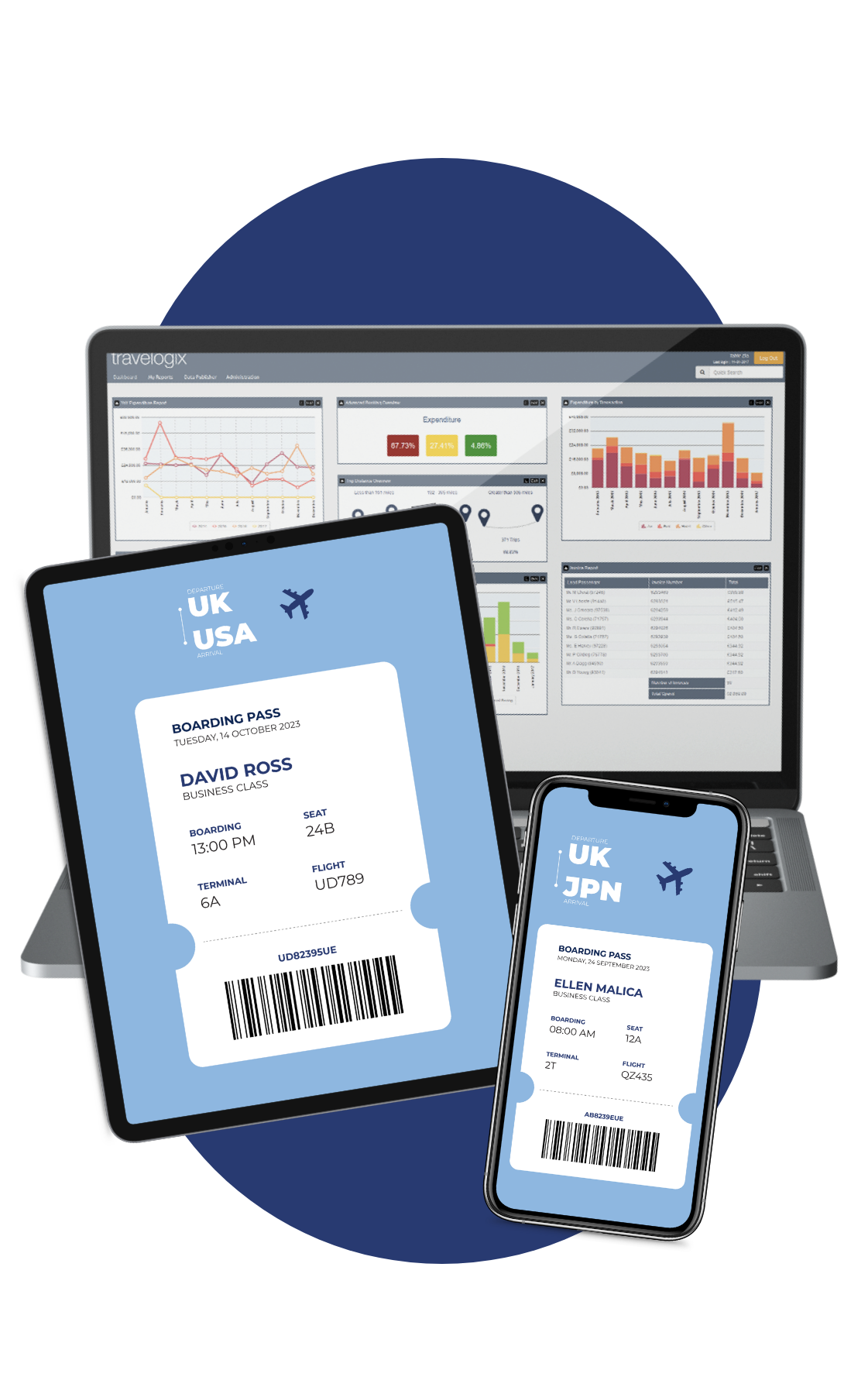
Data is only valuable when it is accessible, accurate and actionable. Our enterprise travel technology provides enterprises with real-time insight into travel activity across the organisation.

From booking behaviour to spend trends and policy compliance, our platform enables leaders to understand what is happening, identify inefficiencies and act with confidence.

This includes:

  • Advanced reporting and analytics dashboards
  • Centralised traveller profiles and approval workflows
  • Integration with finance and expense systems
  • Scalable architecture to support growth and change

By combining technology with expert oversight, we help enterprises turn travel data into measurable return on investment.

Travel with confidence

Delivering excellence in travel management

Strategic enterprise travel management that supports long-term growth

Enterprise organisations face constant change through expansion, restructuring and evolving market demands. Travel programmes must adapt without increasing operational burden.

Enterprise travel management solutions provide a scalable framework that supports growth while maintaining governance and control. As travel volumes increase and operations expand into new regions, organisations retain consistency, compliance and clarity across their global travel programme.

Enterprise travel technology that enables smarter decisions

Managing global travel effectively requires accurate, timely insight. Without consistent tracking and analysis, organisations struggle to understand travel behaviour, compliance and cost drivers.

Our enterprise travel technology provides real-time visibility across the entire travel lifecycle. From booking and approvals to reporting and traveller oversight, organisations gain a single, reliable view of travel activity that supports informed decision-making and long-term optimisation.

Explore our tech stack:

FAQs

How does this work for organisations with very high volumes of travel?

For organisations booking hundreds or thousands of trips each month, the challenge is consistency rather than availability. Travel quickly becomes fragmented when different teams book in different ways, leading to duplicated effort, limited oversight and uneven traveller experiences.

A structured approach allows bookings, approvals and reporting to flow through a single framework, even when travel spans multiple regions and time zones. This supports complex itineraries, short-notice changes and varied traveller needs without relying on manual intervention or local workarounds.

Can this support different travel rules for different regions or teams?

Yes. Large organisations rarely operate under one uniform set of rules. Senior leadership, client-facing teams and regional offices often require different levels of flexibility, approval and supplier access.

Travel programmes are designed to accommodate layered policies that reflect geography, role and business priority. This allows organisations to maintain central oversight while supporting regional autonomy, avoiding the disruption that comes from forcing one rigid policy onto diverse teams.

How does this help with visibility across global travel activity?

One of the most common issues for large organisations is not knowing who is travelling, where they are going or how much is being spent until well after the fact.

Centralised reporting provides near real-time insight into bookings, spend and traveller movement across the organisation. This makes it easier to answer internal questions quickly, support travellers during disruption and make informed decisions about suppliers, budgets and future planning.

What happens when travel plans change or disruption occurs?

Disruption is inevitable when travel operates at scale. Flight cancellations, strikes, weather events and last-minute schedule changes are part of global business travel.

Support is structured so travellers can receive assistance at any time, regardless of location or time zone. This reduces downtime, prevents missed meetings and removes the burden from internal teams who would otherwise need to manage changes outside normal working hours.

How does this approach help finance and procurement teams?

Finance and procurement teams often struggle with incomplete data, inconsistent supplier usage and delayed reporting. When bookings are scattered, it becomes difficult to understand true costs or negotiate effectively.

A consolidated programme provides clear insight into spend patterns, supplier performance and compliance. This supports more accurate forecasting, stronger commercial negotiations and better alignment between travel decisions and wider financial objectives.

Is this suitable for organisations with complex approval requirements?

Yes. As organisations grow, approval processes often become a bottleneck. Too much control slows the business down, while too little creates risk.

Approval structures are designed to reflect real operating conditions. Routine trips can move quickly, while higher-risk or higher-cost travel is flagged automatically. This maintains governance without creating unnecessary friction for travellers or managers.

How does this support duty of care for employees travelling internationally?

Duty of care requires more than policy documents. Organisations need to know where travellers are and be able to support them quickly if something goes wrong.

Traveller visibility, risk alerts and emergency support are integrated into the travel process itself. This allows organisations to respond faster to incidents, meet legal responsibilities and give employees confidence that their safety is taken seriously.

When does it make sense to move away from managing travel internally?

Internal management often works when travel volume is low. As organisations expand, travel becomes more complex and time-consuming, drawing focus away from core responsibilities.

Common indicators include rising admin workload, inconsistent booking behaviour, limited reporting and increasing traveller dissatisfaction. At that point, a managed approach allows internal teams to step back while travel is handled in a structured, scalable way.

Book a free demo